


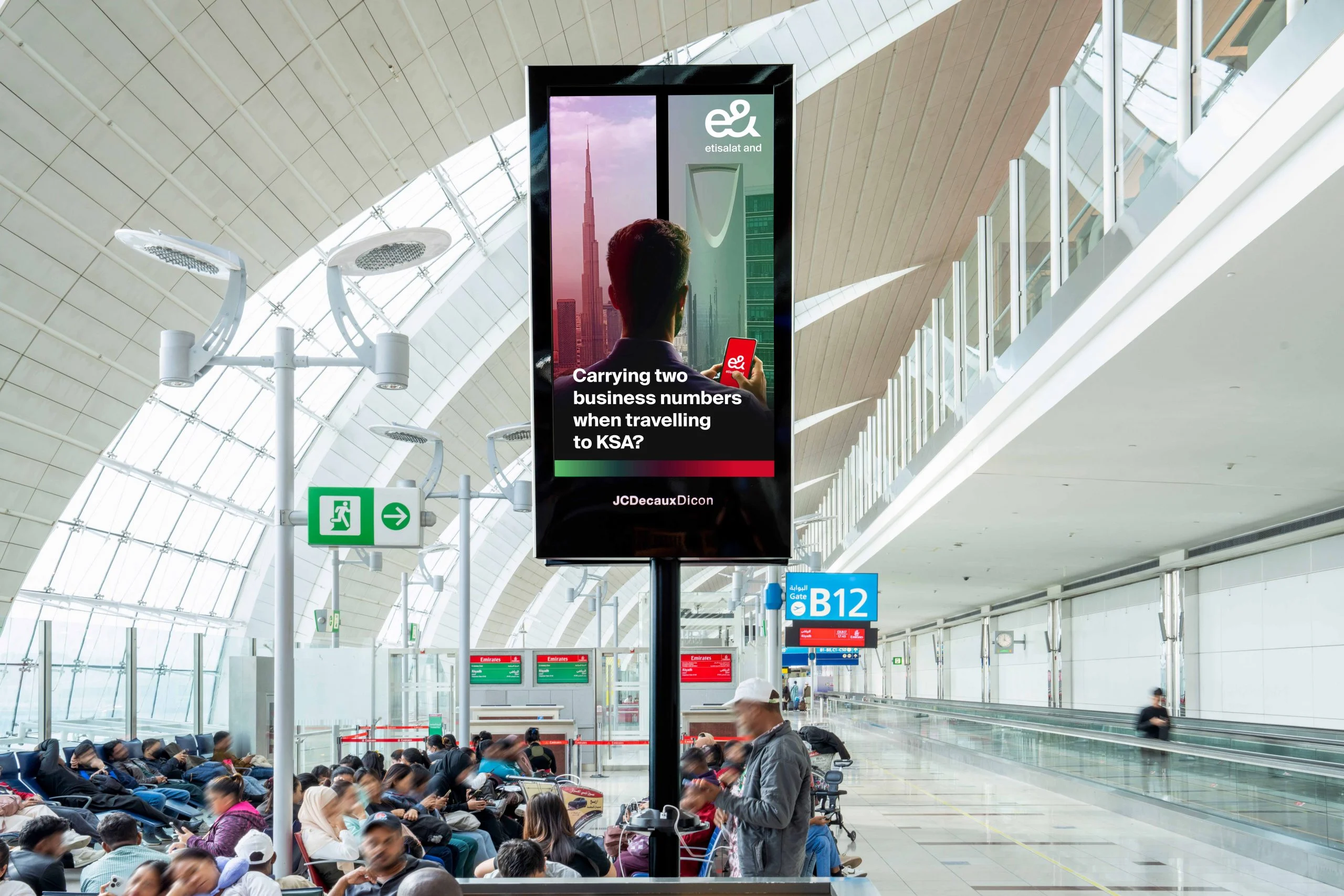
Airport Advertising in the UK: Reaching Captive Audiences
Airports present a unique opportunity for advertisers. With millions of passengers passing through terminals each month, campaigns here reach a diverse and engaged audience in moments of high dwell time. Unlike traditional street advertising, airport environments allow brands to connect with consumers who are attentive, often planning or relaxing while waiting for flights.
Key Advertising Formats
Digital Screens
Large-format digital screens dominate departure and arrival halls. From high-definition screens in rotundas and concourses to carousel-top displays in baggage claim areas, digital formats provide dynamic storytelling potential. Synchronized or rotating takeovers allow brands to create immersive campaigns that capture attention in prime passenger locations.
Column and Wall Wraps
Columns and walls are ideal for high-visibility campaigns in busy areas. Full-wrap designs transform structural elements into bold canvases, creating a sense of scale and presence that static posters cannot match. These placements work especially well for lifestyle, luxury, and travel-oriented brands seeking to make a memorable impact.
Escalator and Lift Advertising
Passengers spend sustained time on escalators and in lifts, making these premium spaces ideal for eye-catching visuals and concise messaging. Repeated exposure during the ascent or descent reinforces brand recall while passengers move through key areas of the terminal.
Interactive and Experiential Zones
Some airports offer experiential opportunities, including digital kiosks, VR activations, and in-person sampling areas. These formats enable brands to engage travellers beyond passive viewing, creating memorable interactions that combine physical presence with digital engagement.
Static Posters and Panels
While less dynamic than digital screens, classic poster and panel placements remain effective in arrival halls, lounges, and corridors. Strategically located, these static ads benefit from high dwell time and repeated passenger circulation.
Strategic Placement and Timing
Airport advertising campaigns are most effective when tailored to passenger behaviour. Departure areas offer high dwell time for digital storytelling, while baggage claim areas capture audiences at a moment of lower distraction but heightened attentiveness. Premium formats near business lounges or duty-free zones allow brands to connect with high-value travellers and frequent flyers.
Seasonality also plays a role, with travel peaks around holidays, school breaks, and major events providing increased exposure. Campaigns planned around these periods can leverage higher footfall and ensure messages reach a maximum number of passengers.
Maximising Impact
To get the most from airport advertising, campaigns should integrate multiple formats, combining large-scale visuals with interactive elements or social extensions. Coordinating messaging across digital, static, and experiential placements ensures a consistent and memorable brand presence. For many brands, airports offer a rare captive audience of affluent and engaged travellers, making them a high-return environment for awareness, launches, and product promotions. Airport advertising is not just about visibility; it is about creating an experience within a high-traffic, high-value environment. By selecting the right formats and placements, brands can turn every terminal into a stage for impactful storytelling.